
Getting Houston County Court Records
Start at MCRO. It covers a public case number, Register of Actions, hearing, judgment, or document. The public material there is free to view. Just remember it is not a certified record. That covers most needs. But an older paper file, a case that will not show up remotely, a certified copy, or a permitted confidential-record request calls for Houston County District Court Court Administration instead. When the remote view falls short, the courthouse public terminal is a practical next stop.
Records can be requested in person. Mail requests use the statewide form. Oral and written requests work too, under Rule 7. A party to the case may file a copy request through Minnesota eFile and eServe. A nonparty should ask Court Administration for an administrative file number first. Plain non-confidential copies can also go out by fax or email when the court allows it. The court publishes no email address for record requests.
- Identify the court, case number, parties, record description, and date or index number if known.
- Check MCRO for an available register or document.
- Choose Court Administration, the terminal, mail, or the Rule 7 request path if MCRO is not enough.
- Use the Copy Request Form to state the copy type, quantity, and delivery choice.
- Confirm the current fee and access decision before expecting an official or restricted record.
Three Houston County Court Record Types
A "court record" is really three different things. One is the Register of Actions, the chronological list of everything filed in a case. Another is a filed document itself. Think of a complaint, motion, order, judgment, or notice. The third is a certified copy, authenticated by Court Administration. The first two may appear online under current public-access rules. The third comes only from the court, never from a downloaded MCRO result.
| Record | What it shows | Houston County route |
|---|---|---|
| Register of Actions | Case origin, filings, proceedings, and dated events | MCRO or Court Administration |
| Filed document | An underlying public paper or image referenced by an event | MCRO Document Search by case number, then Court Administration |
| Certified copy | A court-authenticated copy of an instrument or MNCIS output | Houston County Court Administration |
Keep those distinctions straight when you order. A document link carries no raised seal. A case listing does not mean every filing image is public. Describe the exact item and ask for the copy type you need.
Houston County Court Record Types
One unified District Court system holds all of it. Criminal, traffic, civil, conciliation, family, probate, juvenile, and mental-health files sit in the same local administration structure. Their online visibility is not uniform. MCRO's public categories and the Minnesota Rules decide whether a register or document appears remotely. When you need to inspect a permitted file, track down an off-site record, or get certification, Court Administration is the local office to call.
- Case registers and hearing history for publicly accessible District Court cases
- Public criminal, civil, probate, guardianship, conservatorship, and trust documents when Rule 8 permits remote access
- Orders, judgments, notices, and satisfaction entries where the public record makes them available
- Conciliation Court records and judgment information through the District Court route
- Certified records and copies issued by Court Administration
Some categories carry special restrictions: family party-submitted documents, certain juvenile records, civil-commitment material, domestic-abuse matters, harassment files, and child-protection records. A file can exist in the court system yet offer no public document image online.
Houston County Copy Request Form
The Minnesota Copy Request Form is the standard mail and counter form for the court where the case was filed. It was revised in April 2026. It asks for your contact information, case type, court file number, party information, a document description, date or index number, copy type, number of copies, cost, and delivery choice. No file number? Give as much detail as you can, including the county. For delivery, the form offers USPS, pickup, or a prepaid carrier label. Fax or email works on a plain non-confidential copy. Confirm current remittance details with Houston County Court Administration. Then send the completed form and payment there. Statewide instructions say most in-person requests are handled the same day, though an off-site file can take longer. The form promises no fixed processing time.
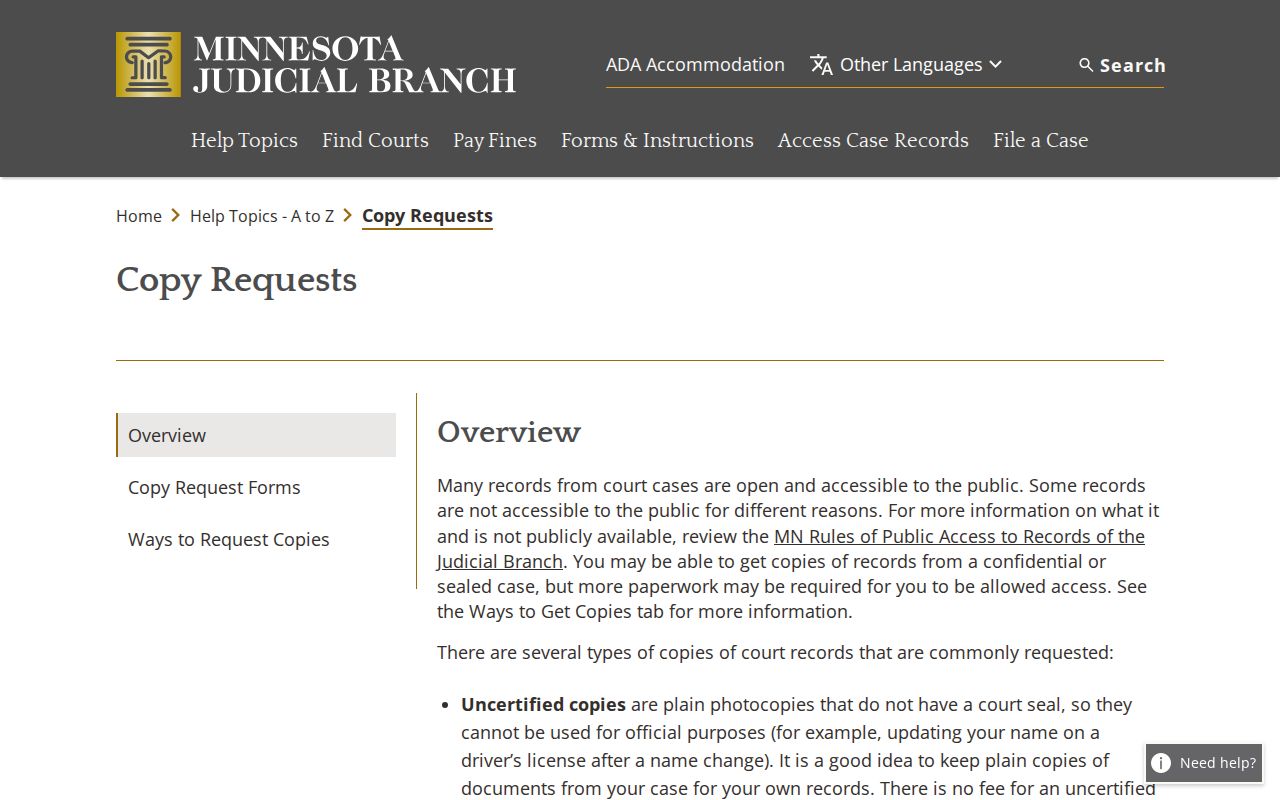
The official copy-request instructions walk through the record-copy process and distinguish it from a general search. Describing the document clearly is the best way to avoid getting the wrong item.
Inside a Houston County Court Record
A public case file can hold more than its Register of Actions. Think of the register as the map. The documents are the actual terrain, supplying the content of each filing and order. Rely on the case number printed by the court. A solid MCRO result works too. The blank MCRO form publishes no Houston-specific case-number pattern. Treat any sample format you see elsewhere with suspicion.
| Case number | The court-assigned identifier for the case and public document search. |
|---|---|
| Register of Actions | The dated index of activities, proceedings, and filings. |
| Pleadings and motions | Public complaints, petitions, answers, motions, and similar papers when access rules allow them. |
| Orders and judgments | Public rulings, judgments, notices, and satisfaction entries. |
| Settings | Public hearing date, time, location or connection type, judicial officer, and hearing label. |
| Certification | An authentication available only through Court Administration, not a free MCRO download. |
Exhibits sit outside the ordinary remote-document tier. Protected identifiers are stripped from remote access too, including Social Security numbers, financial account numbers, addresses, and certain victim, witness, or juror information.
Older Houston County Court Files
Not every Houston County court record started life as an online document. MCRO sends readers to local Court Administration. That is for older paper, microfilm, non-electronic, or otherwise unavailable files. Finding a case online is no guarantee the whole historical file is complete remotely. A blank result cuts both ways. It may reflect a spelling or number mismatch, a restricted category, an expunged record, a retention issue, or a record that simply needs a local access route. The courthouse public terminal sometimes beats remote MCRO. It offers more electronic public access in certain categories. Court Administration can point you to the right custodian. It can explain where a public file is held and outline the records-request procedure. It cannot give legal advice or work around a court-imposed confidentiality rule. Note: For a historical hearing record, identify the case, approximate date, and type of event, so Court Administration can tell a calendar request from a case-file request.
Houston County Copy Fees and Certification
Fees shift over time, so check the current Houston fee catalog before you order anything. Here is the working structure. Plain MNCIS output costs nothing, whether it is printed, scanned, photographed, or captured from a screen. Certification changes the math. A certified document, certified MNCIS image, certified e-file printout, or certified screen print generally runs $14 per document or unit. Want it both certified and exemplified? That tier generally runs $28.
| Item | Official amount or condition |
|---|---|
| Plain copy or uncertified MNCIS output | $0 |
| Certified copy | $14 per listed document or unit |
| Exemplified copy | $14 per listed document or unit |
| Certified and exemplified copy | $28 |
| Report from case management | $5 for 1 to 50 pages, then $25 per additional 50 pages or part |
| Fax or scanning when applicable | $25 per 50 pages or part |
Houston County District Court Court Administration
306 S. Marshall Street, Suite 2100
Caledonia, MN 55921
507-724-7002
Houston County Court Copy Delivery
Delivery choices are spelled out on the copy form. USPS and pickup both work. Fax and email handle only plain, non-confidential copies. You may also send your own prepaid FedEx or UPS label. Paying in person? The statewide instructions allow credit card, check, or money order, and the Houston fee page names the District Court Administrator as the check payee, though payment details can shift by transaction.
For a mail request, call 507-724-7002 and confirm the current remittance details instead of guessing that a general county email reaches court records. Give the court a head start. A known file number, an exact document description, and the plain, certified, or exemplified status you want all speed the response. One caution for multi-page certified copies: the certification holds only while the court staple stays intact.
Houston County Court Fee Page
Treat Houston County's live court-fee page as the authority on current amounts. Any figure copied elsewhere can drift out of date. The page separates filing fees from record-copy fees. It also warns that base amounts leave out county law-library fees. The page names the District Court Administrator as check payee, and it points eligible filers toward a fee waiver. Those details matter for a copy request once you know the item and method.
The local distinction that matters most is simple. An uncertified MNCIS output can be free. A certified document carries a stated charge. Reports, faxing, scanning, judgment searches, and judgment transcripts each have their own fee category. Ask Court Administration to confirm the charge for your specific request, especially if a file must be pulled or a copy needs extra handling.
Sealed Houston County Court Records
Minnesota's Public Access Rules presume openness, but they build separate tracks for remote documents, public terminals, the counter, parties, attorneys, and authorized agencies. A standard copy form does not open a sealed or confidential record. Parties named in confidential cases may have to show identification, and a sealed-file request needs the proper access decision before any copying happens.
Access rules:
Rules 2, 7, and 8 of the Minnesota Public Access Rules set the openness presumption, request process, and remote-access tiers.
Minnesota Statutes section 13.90 directs court-record access to the Judicial Branch rules.
Minnesota Statutes section 609A.03 governs expungement procedure and record-access consequences.
Denied or delayed? Ask which rule the decision rests on. Rule 7 requires that explanation, and Rule 9 supplies an appeal route. The judiciary-records statute shows that access to court files does not follow every general government-data procedure.
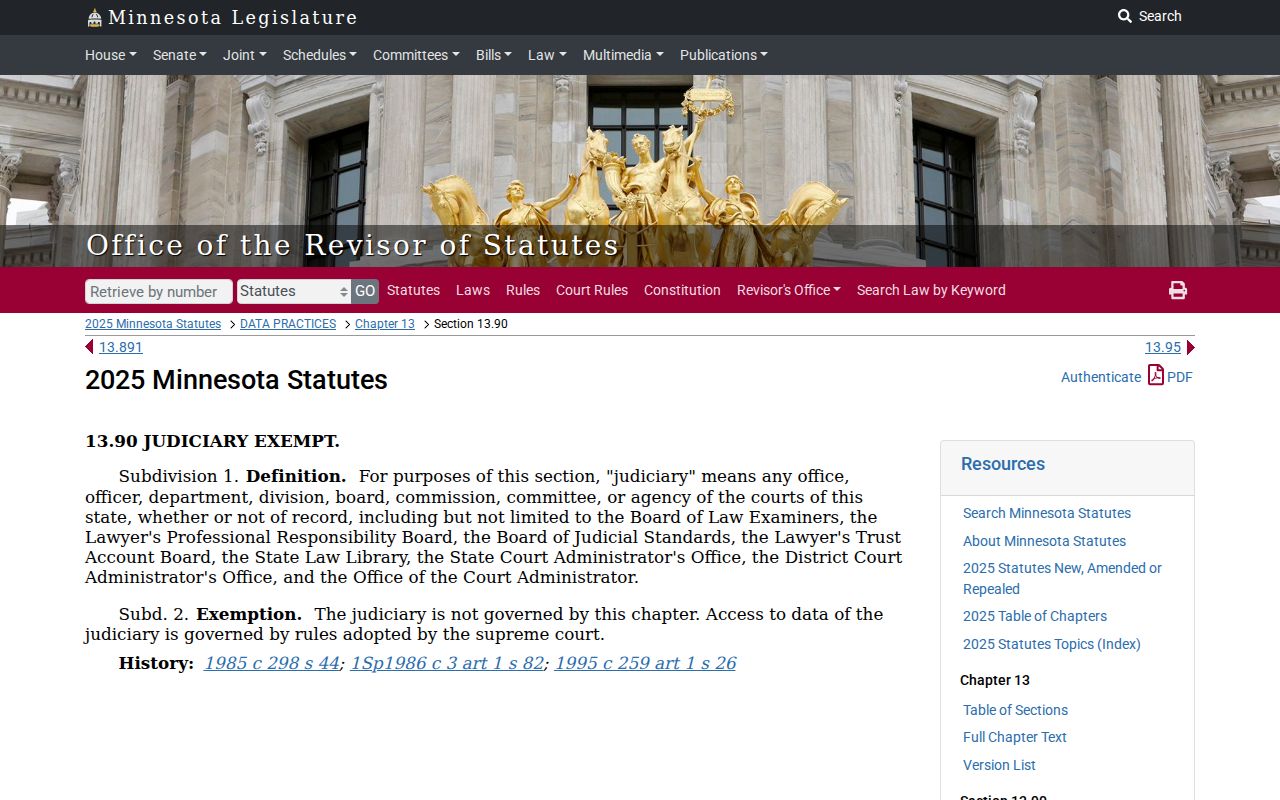
That statute backs up the core local rule. Court Administration and the Judicial Branch's access rules govern the Houston County court record route.